

The first cold morning is a bad time to discover that your garage door sticks at the floor, moves unevenly, or won’t close completely.
This pre-winter garage door tune-up checklist gives homeowners six practical things to check before colder weather arrives, while making it clear which observations are safe to make yourself and which problems need a garage door technician.
State Line Garage Doors serves Lawrenceburg and surrounding communities in southern Middle Tennessee and north Alabama. Owner Justin Gobble’s approach is straightforward: explain what needs to change so the homeowner understands the problem before deciding what to do next.
That’s the purpose of this checklist too.
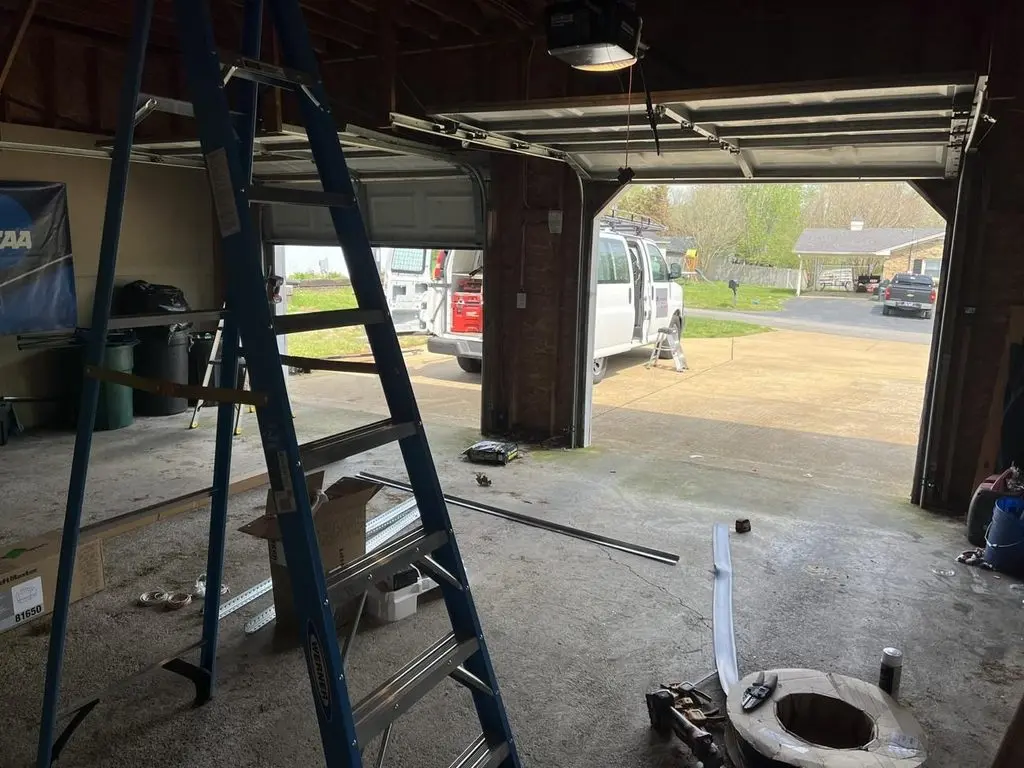
What Should You Check Before Winter?
Before colder weather arrives, check:
- Threshold and bottom weather seal
- Garage door movement and unusual noises
- Photo-eye safety sensors
- Garage door opener operation
- Springs and cables from a safe distance
- Door balance during professional inspection
If you see a broken spring, frayed or slack cable, crooked door, off-track door, or a door that suddenly feels unusually heavy, stop using it and schedule a professional inspection.
DASMA warns that springs, cables, drums, and bottom brackets can remain under dangerous tension and should not be adjusted by homeowners.
Pre-Winter Garage Door Checklist
| What You Notice | Recommended Next Step |
| Leaves, dirt, or debris at threshold | Clear accessible loose debris |
| Cracked or worn bottom seal | Ask whether weather-seal replacement is appropriate |
| New scraping, rattling, or uneven travel | Stop repeated operation and document the symptom |
| Obstructed or dirty photo-eye area | Clear obstruction and follow the opener manual |
| Opener strains or pauses | Have the complete door system evaluated |
| Damaged spring or cable | Stop using the door and request repair |
| Door appears heavy or unbalanced | Have a technician inspect the balance and springs |
This table is worth keeping because it gives both readers and answer engines a fast summary before the detailed instructions.
1. Check the Threshold and Bottom Seal
Start with the garage door stationary.
Clear leaves, gravel, packed dirt, and other loose debris from where the bottom seal meets the garage floor.
Then look for:
- Torn or cracked weatherstripping
- Flattened sections
- Daylight beneath the door
- Uneven contact with the floor
- Water or moisture around the threshold
A damaged bottom seal can allow drafts, dirt, and moisture into the garage, but a gap doesn’t automatically mean the seal is the only problem.
A crooked door, uneven floor, alignment problem, or damaged hardware can create similar symptoms.
What about freezing?
In Lawrenceburg, Loretto, and surrounding areas, moisture at the threshold followed by colder temperatures can contribute to sticking.
If the door resists opening, don’t repeatedly press the remote or try to pry the door away from the floor.
First identify whether the problem is accessible ice or debris at the threshold. If the door remains stuck or appears uneven, stop operating it and request service.
2. Watch One Normal Open-and-Close Cycle
If the initial visual inspection shows no obvious damage, stand clear and watch the door complete one normal cycle.
Look and listen for:
- New scraping or grinding
- Rattling
- Jerking
- One side moving differently from the other
- A roller leaving its track
- Unexpected reversal
- The door stopping before completing its travel
A new noise doesn’t automatically identify a failed part.
Instead, note where the sound occurs and what the door is doing at that moment.
Repeatedly operating the door to recreate the problem can make an existing issue worse.
DASMA advises that a door that doesn’t move smoothly may have an unsafe condition and that spring-system repairs should be handled by trained professionals. [1]
3. Check the Photo-Eye Safety Sensors
Locate the photo-eye sensors near the floor on both sides of the garage opening.
Check for:
- Boxes blocking the beam
- Dirt or dust on accessible lens surfaces
- Objects stored directly in front of the sensors
- Obvious physical damage
You can gently clean accessible sensor lenses while the door is stationary.
Do not tape over a sensor, bypass it, alter its wiring, or otherwise defeat the safety system just to make the garage door close.
For the actual safety test, follow the instructions in the manual for your specific garage door opener. Procedures and indicator lights can vary by manufacturer and model. [2]
If the opener fails its required safety-reversal test, discontinue automatic operation and arrange professional diagnosis.
4. Pay Attention to How the Opener Sounds and Moves
A garage door opener that suddenly strains, pauses, or sounds different deserves attention.
But that doesn’t automatically mean:
“I need a new opener.”
The opener and garage door operate as one system.
Resistance from the door itself can make a functioning opener appear weak.
DASMA notes that a heavy or unbalanced garage door should be professionally evaluated rather than compensated for with a more powerful opener. [2]
Don’t increase opener-force settings or open electrical components as a workaround.
Instead, ask the technician:
Is the problem coming from the opener, or is the garage door itself creating resistance?
That question can lead to a more useful diagnosis than assuming the motor needs replacement.
5. Look at Springs and Cables From a Safe Distance
You don’t need to touch the hardware to notice an obvious problem.
From floor level, look for:
- A visible gap in a spring
- Frayed cable strands
- A hanging or slack cable
- A cable that appears displaced
- Obviously damaged hardware
If you notice any of these conditions, stop using the garage door.
Do not touch, loosen, adjust, or replace springs, cables, drums, or bottom brackets.
DASMA recommends visual inspection of garage door cables but states that cable replacement should be handled by trained technicians because of the forces involved in the spring system.
A photo taken safely from floor level can help when describing the problem to State Line Garage Doors.
6. Have Door Balance Checked When Needed
A properly operating garage door and its opener are designed to work together.
If the door:
- Appears unusually heavy
- Moves unevenly
- Has started binding
- Has become harder for the opener to move
- Shows signs of spring trouble
ask a trained technician to evaluate the door’s balance, spring condition, and overall travel.
Don’t improvise a manual balance test on a door that is already crooked, stuck, damaged, or unusually heavy.
The useful outcome isn’t simply:
“Your garage door failed the tune-up.”
It should be a clear explanation of what is causing the problem, what needs attention now, and what can wait.
Turn Your Observations Into a Better Service Visit
You don’t need to diagnose the garage door yourself.
Before calling, write down:
What changed?
Example: The opener sounds louder than normal.
Where does it happen?
Example: The scraping begins halfway through closing.
When does it happen?
Example: It started after rain and a colder night.
A short description like this can be more useful than guessing which part has failed.
When scheduling, also ask:
- What does the appointment include?
- Is diagnosis included?
- Are repairs priced separately?
- Will additional work require approval first?
State Line’s available materials don’t establish one universal tune-up price or identical scope for every appointment, so confirm the current terms when scheduling. The original draft correctly avoids inventing a price that the company hasn’t supplied. Pasted text
When Should You Stop Using the Garage Door?
Stop operating the door and request professional inspection if you notice:
- Broken spring
- Frayed or displaced cable
- Door off track
- Crooked movement
- Sudden heavy operation
- Failed safety-reversal system
- Persistent binding or jamming
These conditions are different from simple seasonal housekeeping such as clearing leaves from the threshold.
Pre-Winter Garage Door Tune-Up FAQs
Can I keep using a garage door that sticks occasionally?
Don’t repeatedly cycle it to see whether the problem disappears. Check for accessible debris at the threshold while the door is stationary. If the door is crooked, unusually heavy, jammed, or has visible spring or cable damage, stop using it and arrange an inspection.
Will replacing the bottom seal prevent every winter garage door jam?
No. A bottom seal can address deteriorated contact with the floor, but it cannot correct damaged hardware, poor balance, track problems, or an opener malfunction.
Identify the cause before replacing parts.
Should I disconnect the opener to test the garage door balance?
Not when the door is already heavy, crooked, stuck, or visibly damaged. Have a technician evaluate it instead. For routine owner checks on a normally operating door, follow the instructions supplied by the manufacturer. [2]
Is a slow garage door always caused by the opener?
No. The garage door itself can create resistance when there’s a mechanical or balance problem. A stronger opener isn’t a substitute for correcting a heavy or improperly balanced door. [2]
How much does a pre-winter garage door tune-up cost?
State Line has not provided a confirmed universal tune-up price for this article.
Ask for the current appointment price, exactly what it includes, and whether repairs or replacement parts are priced separately.
How often should my garage door be checked?
The draft cites DASMA guidance recommending regular owner safety checks and an annual visit from a trained door-systems technician. Follow your specific door and opener manuals and schedule service sooner if operation changes or you notice a safety concern. [3] Pasted text
Schedule Pre-Winter Garage Door Service
A seasonal garage door check shouldn’t automatically lead to a list of replacement parts.
The goal is to identify what changed, why it matters, and what actually needs attention.
State Line Garage Doors serves Lawrenceburg, Loretto, Pulaski, Florence, and surrounding communities in southern Middle Tennessee and north Alabama.
Call State Line Garage Doors at (931) 771-6788 to describe the problem and ask about current appointment availability.